Hello, and welcome to the fifth week of The Global Fashion Files! This week, we will take a look at England’s past, present, and future in women’s fashion. Known for having feminine styles with edgy elements and the world’s best tailoring, the fashion in England is quite eclectic. Everyone showcases their own style, highlighting their individuality. From the royal fashions of the past to the edgy high-end brands of the present, it is unsurprising that England—and more specifically, London— is considered among the world’s fashion leaders.
Past: Early in England’s history, the royal family dictated many of the prevailing styles. This tradition began as early as the seventeenth century. Because of England’s proximity to France, London gained access to the newest fashions and began to set the style standard in the country.
In the seventeenth century, gown styles were more modest with necklines becoming squarer and less revealing. Heavily-decorated corsets were visible at the front of the gown. Several skirts were layered under an overskirt with a structural support of some sort, such as boning or metal. The overskirt was split in the front, revealing the skirts beneath it, and it was elaborately draped in the back, ending in a long train. The mantua, a full-length dress cut in one piece as opposed to a separate skirt and bodice, became a popular style as well. Other than gowns, capes and jackets of shorter and longer lengths were the prevailing garments in this century.
England in the eighteenth century saw new styles emerging in the country. Wide hoops, which influenced the shape of the gowns, were worn from 1720 to 1780. In 1770, hip pads and bustles gained popularity, eventually replacing hoops. However, England’s royal court continued to require hoops as part of formal dress.
Similar to France, many women in England wore gowns with open bodices and skirts to showcase ornamental stomachers. Intricately-patterned fabrics were favored by many women who wore extremely wide skirts in order to display more of the prints. Necklines were more revealing with square or oval shapes and sleeves ended in decorative ruffles.
In the 1770s, skirt fullness shifted from the sides to the back and “false rumps,” or pads at the back to support the skirt, were the dominant style. In addition, hemlines rose. Some gowns featured hemlines above the ankle.
The late eighteenth century (1795-1800) included a slight reprieve from the more restrictive styles of the past. More fashionable women discarded their corsets, but some women kept them, placing them over a light chemise. Dresses were cut in straight silhouettes, and the waistline was located directly under the bosom. Short, fitted, or puffed sleeves were on most of the dress styles of this period. Light fabrics, such as cotton and muslin, were utilized in the creation of the dresses, and hemlines brushed the floor once again.
The nineteenth century had a greater number of style options. Daytime and evening dresses each developed a distinct appearance. Daytime dresses rarely varied in style, featuring wide sleeves, full skirts, and various neckline options. Evening dresses may be characterized as a bit more revealing with lower necklines and shorter skirts and sleeves. While cotton, muslin, challis, batiste, and merino wool were the primary fabrics for daytime dresses, evening gowns were made of more luxurious textiles, including silk and organdy.
The mid-nineteenth century had more subdued style options. Clothes became plainer and less extravagant. Even formal garments appeared dowdier with more conservative silhouettes as well as fewer ruffles and trimmings.
From 1878 to1890, new supporting garments and dress styles emerged. The bustle, a supportive framework to add fullness to the back of a gown, was worn by most women. Bodices appeared to be a closely-fitted jacket style and skirts were matched in fabric and color to the bodice. The skirt was made of a large amount of fabric in order to facilitate elaborate draping at the back of the garment.

Image: An example of a gown from the Bustle Period.
Unlike in the past, evening dress was quite similar to daytime apparel. Often, women owned two bodices—one for daytime and one for evening—to match each skirt in their wardrobe. Finer fabrics, decorative embellishments, and various sleeve and neckline cuts distinguished eveningwear from daywear. As the years approached 1890, bustles became smaller, but necklines, sleeves, and embellishments remained fairly unchanged.
From 1890 to 1900, styles became focused around the hourglass shape. Gored skirts flared out into a bell shape, and menswear-inspired blouses, called shirtwaists, were tucked into the skirts. Leg-of-mutton sleeves helped to distinguish women’s blouses from men’s dress shirts. More elegant shirtwaists were embellished with lace, ruffles, and embroidery. In addition, evening dresses had the same silhouette as daywear, but they had lower necklines, longer skirt trains, and more embellishments.
In the twentieth century, women’s fashion in England focused on a leaner silhouette and fashion changes were more frequent. One-piece dresses that provided an S-curve silhouette prevailed. High collars, trumpet-style skirts, and a curved hipline typified the era from 1900 to 1908. Certain techniques like pleating, tucking, lace inserts, and embroidery were employed to create a more feminine style.
Styles of 1909 to 1914 did not vastly deviate from styles in 1900 to 1908. Silhouettes became straighter and narrower while hemlines rose slightly. In 1914 to 1918, England saw their styles subtly influenced by the war. One-piece dresses and belted coat dresses were popular. Garments became wider, allowing for effortless movement, and hemlines rose quite significantly—in some cases, as many as eight inches above the ground. Women also began to wear tailored suits in greater numbers because they were more practical for daywear.
Styles in the 1920s became even straighter with no waist definition. Dresses started out long but gradually became shorter through the decade. Separates gained popularity as well, particularly blouses and sweaters, to be worn with skirts. Eveningwear designs shared the same silhouettes with day dresses but were often beaded to achieve a fancier appearance.
The 1930s and 1940s saw garments emphasizing a woman’s natural curves. Styles remained unchanging during the wartime period, but dresses, blouses, skirts, and suits remained the most popular pieces in women’s wardrobes. Most designs were more practical, utilizing utilitarian fabrics and fewer embellishments. In contrast, evening dresses were much more daring, featuring low-cut, bare-backed styles and sleeveless, halter bodices. Just like the rest of the world, following the war, Christian Dior’s New Look enchanted England with its extravagance and became a popular fashion choice.
For the first time, the 1950s saw two prevailing silhouettes: a narrow skirt and a fuller skirt. Necklines were either round or square, and many garments had close-fitting sleeves. Varied dress styles were more plentiful than in the past as well.
The greatest change in women’s fashion in England occurred in the 1960s. For perhaps the first time in its history, the younger generation began to determine the mainstream styles. Teenagers gained more influence and fashion reflected this change with bolder, brightly-colored garments. Garments, such as bodysuits and miniskirts, gained a following among young customers. Influential celebrities, particularly Twiggy, played an integral role in young people’s adoption of these trends.
Space Ageism was another popular trend in 1960s England. Designer Andre Courreges showcased his “Space Age” collection in 1964, modernizing women’s fashion with pantsuits and short skirts. White and silver colors, vinyl materials, and glossy, metallic embellishments further characterized this fashion movement.
In the 1970s, the Glam movement attracted the most attention among British youth. Many of the garments were inspired by rock-and-roll, androgynous elements, and glitzy details. Tight jumpsuits, sequined bomber jackets, and satin pants were just some of the garments women who followed this movement wore on a daily basis. For women who were less adventurous, certain wardrobe staples like wrap dresses, pantsuits, cardigans, and trousers were available in neutral colors.
By the 1980s, there were many diverse fashion options for women in England. Because there was not necessarily a predominant style, unconventional garments were just as likely to be seen on the streets of London as classic apparel pieces. However, by the 1990s, British fashion designers gained more worldwide attention. Princess Diana, wife of the British throne’s heir and a global fashion icon, was frequently photographed wearing garments created by British designers, sparking the world’s interest. England’s design talent gained additional attention when several British designers received positions as head courtiers at Dior and Givenchy.
Present: England’s fashion industry continues to thrive in the present day. With strong academic fashion programs and talented designers, there is no lack of intriguing fashion. Because fashion styles in the country have remained diverse since the 1980s, women have the opportunity to nonverbally express themselves.
Despite the range in styles, British women tend to follow certain rules that allow them to remain among the world’s fashionable elite. Although British women might not share the same style, they tend to buy investment pieces, or garments that will last a long time. They favor trench coats—a wardrobe staple in many British closets because of England’s history of tailoring—and other jackets in neutral or bold colors. Because of the country’s weather, many women layer their clothes, particularly long-sleeved cotton shirts under dresses and sweaters, to be prepared for warmth in the daytime and cold in the evening.
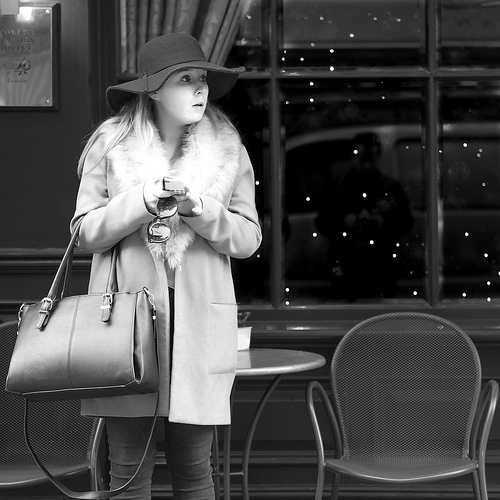
Image: One example of British women’s styles.
As a culturally diverse country, it is possible to see an eclectic mix of styles on the streets of major cities like London. In 2018, there are plenty of people who follow the current trends, but there are also some individuals who choose to ignore them. All British women have their preferred style, and many of them tend to identify the one that best suits them and remain loyal to it.
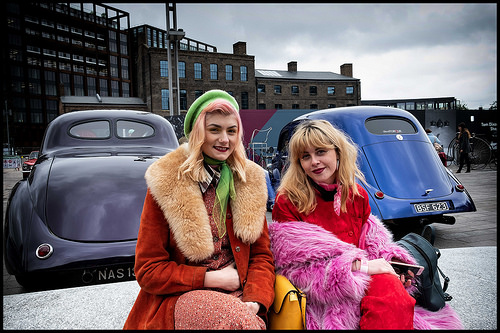
Image: Women’s unique and colorful style in England.
While women’s favorite brands will vary based on their style preferences, certain brands are more popular in England than others. Nike, Adidas, Urban Outfitters, Asos, H&M, Gucci, Topshop, and Louis Vuitton are just a few of the most popular fashion brands in the United Kingdom. Higher-end British designers and brands like Stella McCartney, Burberry, and Alexander McQueen are iconic in England and abroad. Thus, this proves England, particularly London, has an exceptional mix of domestic and global fashion brands.
In addition to its assorted street styles and near limitless brand options, England’s fashion industry is further bolstered by its high-ranking academic fashion programs. The Business of Fashion compiled a list of the best fashion programs in the world with several colleges in England, including Central Saint Martins, University of the Arts London, ranking in the top five. Overall, the list assesses academic institutions based on their reputation, selection criteria, and student satisfaction levels. It is apparent that many of England’s academic fashion programs are far superior to other schools. Because of this, talented students from around the world gather in London for their education, contributing to England’s already flourishing fashion industry.
Future: England has a strong and prominent fashion history in the past and present. Therefore, it is unsurprising that the country’s future in fashion appears just as promising. With the influence of a plethora of fashion industry trends, including sustainability, retail technology, and emerging fashion technology brands, the future of fashion in England is certainly bright.
Around the world, there is a greater focus on sustainability than in the past, particularly in the fashion industry. One of the strongest supporters of this trend is British fashion designer Stella McCartney. She tries to design more environmentally-friendly products by forgoing the use of leather and fur. In addition, she is candid about her commitment to sustainable fashion, dedicating an entire section on her website to sustainable practices and awareness.
Globally, many brands are experimenting with wearable technology, but England also has an interest in retail technology. Numerous British startups are turning a profit by utilizing technology to improve customers’ shopping experiences. One of the startups, Thread, uses online stylists, artificial intelligence, and machines to assist consumers’ when they shop. Although the company is currently dedicated to assisting men, there is great potential to move into the women’s market.
Furthermore, smartphone apps play a part in the country’s retail experience. The United Kingdom’s Snap Fashion app allows individuals to take a photo of a garment of their choosing, and, using image recognition software, compares the photos against garments sold in stores near them. Stores on London’s High Street—a premier shopping destination—want to use apps like this to merge the in-store shopping experience with the digital one by providing customers’ with more product information, such as color options and customer reviews. It is their hope that consumers will make informed purchasing decisions, and the retailers will receive valuable data about customers’ product interests.
Despite being a fashion leader, England is still susceptible to other global fashion trends and wearable technology is no exception. In 2004, designers Francesca Rosella and Ryan Genz found the luxury fashion brand CuteCircuit. Rosella claims it is the first technology fashion brand, and they produced the first internet-connected garments. Some of their designs include dresses with rechargeable LEDs, handbags that can display messages from an individual’s smartphone, and tuxedos with lighted collars. Their innovative designs are sold globally, including to celebrity fans like Fergie and Irina Shayk, and some of their garments are also on display in museums around the world.
The Last Stop: England has an extensive and intriguing relationship with fashion. The vast amount of style options, from the ever-evolving clothing of the past to the diverse garment choices of the present, further highlight the country’s fascinating history. The future of England’s fashion industry appears quite positive as well with a focus on sustainability, digital retail resources, and wearable technology. As the years progress, England continues to maintain its position as a leader in global fashion trends.
Once again, thank you to all of my readers! If you found this information helpful and inspiring, or you would like to see a specific topic featured in one of my weekly blog posts, leave a comment. Be sure to check out my previous posts on the past, present, and future of fashion in France, Egypt, Nigeria, and Japan. Next week, we will explore the history of women’s fashion in Spain!
My Resources, Your Resources:
Clinton, Leah Melby. “The 7 Style Rules That Fashionable British Women Swear By.” Glamour, 14 Oct. 2015, https://www.glamour.com/story/british-girl-style. Accessed 13 Oct. 2018.
Elmes, John. “UK is World’s Top Destination for Fashion Students.” Times Higher Education, 24 Aug. 2015, https://www.timeshighereducation.com/news/uk-worlds-top-destination-fashion-students. Accessed 13 Oct. 2018.
Finley, Sarah. “Snap, Swipe, Like: The Mobile Future of Fashion Retail.” BBC, 24 June 2016, https://www.bbc.com/news/business-36601736. Accessed 12 Oct. 2018.
Kapfunde, Muchaneta. “UK Startups Disrupting the Fashion and Retail Tech Space.” FashNerd, 22 Oct. 2017, https://fashnerd.com/2017/10/uk-fashion-tech-retail-startups/. Accessed 13 Oct. 2018.
Keller, Carsten, et al. “Succeeding in Tomorrow’s Global Fashion Market.” McKinsey, Sept. 2014, https://www.mckinsey.com/business-functions/marketing-and-sales/our-insights/succeeding-in-tomorrows-global-fashion-market. Accessed 13 Oct. 2018.
Knowles, Kitty. “Meet CuteCircuit: The British Fashion Tech Brand Loved By Fergie and Katy Perry.” Forbes, 29 Mar. 2018, https://www.forbes.com/sites/kittyknowles/2018/03/29/cutecircuits-fantastic-fashion-tech-world-firsts/#186216f11ee6. Accessed 12 Oct. 2018.
Mackenzie, Mairi. …Isms: Understanding Fashion. Singapore, Universe Publishing, 2010.
Mendes, Valerie, and Amy de la Haye. Fashion Since 1900. 2nd ed., Singapore, Thames and Hudson, 2010.
Raven, Robin. “What to Wear While Visiting London.” USA Today, 14 Aug. 2018, https://traveltips.usatoday.com/wear-visiting-london-13085.html. Accessed 13 Oct. 2018.
Tortora, Phyllis G., and Keith Eubank. Survey of Historic Costume.5th ed., USA, Fairchild Books, 2010.

 The Global Fashion Files