Hello, and welcome to the eighth week of The Global Fashion Files! This week, we are taking a look at the past, present, and future of women’s fashion in the United States! Although it once followed the styles coming out of Paris, the United States eventually gained attention for its own fashion industry. Now, the US has one of the most influential fashion industries in the world. Undoubtedly—with its melting pot of styles and designers—the fashion industry in the United States will continue to thrive long into the future.
Past: Other than France, the United States arguably has one of the longest, most well-documented relationships with fashion. This is due largely in part to the many individuals who have researched and published written works on the subject. As a result, the plethora of information has made it easy for everyone to read about the United States’ lengthy fashion past.
In the early eighteenth century, Americans residing in towns adopted European fashion styles that primarily originated in France. If clothing could not be imported, the styles were replicated by local dressmakers. These included styles such as the sacque (a loose-fitting gown) and robe à la française. However, working-class individuals favored practical garments, including a chemise, petticoat skirt, and short gown (similar to a blouse or jacket). They would complete the look with an apron.
Styles in the United States continued to mirror the country’s European counterparts. Empire styles characterized by straighter silhouettes, higher waistlines, and lightweight fabrics dominated in the early nineteenth century. A short jacket, known as a spencer, or a pelisse, a full-length jacket, was worn over the gowns of this period to provide warmth and modesty.
Between 1820 and 1835, styles began to transition. On dresses, waistlines moved lower, sleeves grew larger, and skirts became wider. In addition, perhaps the greatest variety of sleeve options up until this point became available to women, including demi-gigot, gigot, imbecile, and puffed sleeves.
The concept of wearing different types of gowns for specific times of the day emerged as well. Women began to wear daytime dresses, walking dresses, and evening dresses—each with a distinct appearance for the time’s anticipated activities. Day dresses were often constructed of utilitarian textiles, such as muslin, challis, and cotton, and evening dresses featured more luxurious fabrics like satin, silk, and organdy.
By 1836 to 1850, somber dresses were the primary style. Gowns appeared heavier, losing some of the lightness from previous decades. Evening dresses even lost some of their opulent appeal.
Known as the crinoline period from 1850 to 1870, women’s styles regained some of their former glory. Women wore hoops constructed of whalebone or steel to support the frequently changing silhouettes. Daytime styles were either one-piece dresses or separate blouses and skirts. During this period, a new style came to the forefront of fashion: the princess dress. With no waistline seam, the one-piece dress was shaped by long gored sections extending from the shoulders to the hem. In addition, evening dresses became daring and sumptuous once again with low, off-the-shoulder necklines, short, arm-baring sleeves, and elegant, intricate embellishments.
From 1870 to 1890, bustle-oriented styles were prevalent. Bodices took on the appearance of short jackets and skirts—with plenty of back fullness created by a bustle and long lengths of fabric—were made to match each bodice’s color. This style created a silhouette that appeared slim and fitted from the front and voluminous in the back. By the 1890s, bustles were no longer popular, and many women chose to focus on an hourglass silhouette.
Beginning in 1900, fashion in America began to change at an increasingly rapid pace. From 1900 to 1908, the predominant S-curve silhouette was highlighted in one-piece dresses with high-boned collars, full bodices, and rounded-hipline skirts. Women saw dresses becoming straighter, tighter, and shorter during the years between 1909 and 1914 as some extreme versions were named “hobble skirts.” During World War I, dress styles were more practical. Fuller, shorter skirts, looser bodices, and straight, fitted sleeves were more common, providing women with a greater range of movement than in previous years.
The 1920s saw the next biggest shift in American women’s fashion. Following the conclusion of World War I, some women adopted a youthful, boyish look that favored tunic, drop-waist dresses and straight-cut chemise styles. While the silhouette was quite simple, fabrics were elaborate in patterns and embellishments. These garments were quite easy and inexpensive for dressmakers to replicate, making it the preferred style of many women in this era.
In contrast to the flat bosom and straight-bodied silhouettes of the 1920s, the 1930s placed emphasis upon a woman’s natural curves. One-piece dresses, skirts, blouses, and suits were the most popular daytime apparel pieces, and hemlines fluctuated between long and short. Regardless of the garment type, all of them clearly outlined the wearer’s body shape.
Although many Americans still followed the styles dictated to them by Paris couture designers like Gabrielle “Coco” Chanel and Elsa Schiaparelli, Hollywood became influential in fashion as well. Women could watch their favorite actresses on the big screen and later go out and purchase replicated designs or garments with comparable design details to achieve a similar look. Movies in the 1930s served as a form of escape for many individuals and the fashion worn by the biggest stars was an important part of the appeal.
During World War II, American women adopted utilitarian styles. Designs were regulated, enforcing strict limits on fabric yardage, seams, buttons, pleats, and stitching. Tailored suits, one-piece dresses, skirts, and blouses needed to adhere to these regulations and be produced in practical styles.
Up until this point, American women were heavily reliant on Paris designers to learn about the newest fashions. Cut off from European fashion during World War II, American designers saw a chance to prove themselves. During this time, US designers became known for ready-to-wear, particularly minimalist separates and sportswear. It was the first step toward the establishment of the modern American fashion industry.
After World War II, Paris regained the world’s attention—including that of American women— with Christian Dior’s “New Look.” The abundance of fabric and luxurious appearance were a drastic departure from the wartime styles. Many women wore the style in some capacity as it was a welcome shift from their more practical war wardrobe.
The late 1940s saw a variety of dominant silhouettes for the first time in history. Both full and narrow skirts were worn by women. Neckline options ranged from rounded to square, and sleeves could be found in a variety of styles.
The 1950s and 1960s saw women continuing to wear the narrow waist, full skirt style of the “New Look,” but they were also exposed to new unfitted dress styles. In the mid-1950s, Dior and Cristobal Balenciaga released collections with A-line and tunic dresses. Although some women were initially reluctant to try the new fashion, unfitted dresses found a place in most American women’s wardrobes by the mid-1960s.
In the mid-1960s, the United States’ youth population began to dictate fashion trends. The shortest, most daring skirt styles to date—miniskirts and micro minis—emerged on the fashion scene, and only the chicest individuals wore them. At the end of the decade, some designers introduced the maxi, a full-length silhouette, and the midi, a calf-length silhouette, as other possible options. However, these styles were not widely adopted, and these lengths would not gain popularity until the mid-1970s.
By the 1970s, women of all ages began to wear jeans and pants on a regular basis. Flared, bell-bottom jeans as well as thigh-grazing hot pants served as the primary styles at this time. These bottoms could be paired with a variety of tops, such as loose-fitting blouses or tight-fitting sweaters.
Fashions of the late 1970s were more relaxed. Dresses that pulled on over the head and belted around the waist were popular. Wrap dresses, particularly those designed by Diane von Furstenberg, were a simple and common addition to women’s wardrobes. Pantsuits remained a dominant option, especially for women who were joining the workforce in larger numbers. While blouses and sweaters were fitted, they were not as tight as the styles of the early ’70s and oversized versions became prevalent as well.
It was clear by the 1980s that American consumers favored ready-to-wear apparel designed by domestic or international brands. Just as France was the founding country of haute couture, the United States’ claim to fame was ready-to-wear apparel. It was an exciting time for the American fashion industry as new designers, including Carolina Herrera, Tommy Hilfiger, Donna Karan, and Michael Kors, debuted their collections and presented their unique design perspectives.
Although some people might associate the 1980s with broad, padded shoulders and bright colors, the decade also saw the emergence of many so-called “style tribes.” Punks, goths, preppies, grunge, hip hop, and emo all had a style distinct to their particular “tribe.” The variety of fashion options encouraged individuals to visually express their point-of-view.
From the 1990s to present day, there has not been a prevailing style in the United States. Millions of fashion designers and brands exist in the world, giving consumers a plethora of options. Because of this, individuals are able to combine garments in their own way, developing a style that is specific to them.
Present: The United States is a melting pot of styles. With access to domestic and international brands, Americans are able to purchase garments of their choosing and mix them in a variety of ways. Using clothing to visually express one’s self is perhaps the greatest benefit of fashion.
From my years of living in the United States, it is difficult to identify one particular style among all women. On any given day, I may see someone dressed in cut-out yoga pants, a t-shirt, and sneakers or skinny jeans, a tank top, a cardigan, and boots or a full-length dress and high heels. Furthermore, individuals’ garment selections can be affected by many different factors, including culture, religion, weather, and personal style. These simple outfit examples do not even begin to scratch the surface of possibilities, but they can provide a brief glimpse into the diversity of individuals’ styles.
 Image: New York City, a fashion capital, is the perfect place to see the varied styles in the US.
Nevertheless, there are new trends that appear throughout the year and gain attention from fashion-forward individuals. In 2018, new trends abounded on the runways. Dark denim, plaid, throwback florals, athleisure, and redesigned trench coats are promising trends for this year. Wide-leg trousers, brand logos, and embellished jeans are also prevalent trends on the streets of New York and Los Angeles. However, new trends for the upcoming year include tie dye fabric prints, sheer fabrics, coordinating garments, and neon colors, as seen on the Spring 2019 New York Fashion Week runways.
Information about fashion is easy to access because of the variety of publications dedicated to fashion in the United States. Magazines like Harper’s Bazaar, InStyle, Vogue, and W are based in major US cities, including New York and Los Angeles, allowing readers to access—in both digital and print versions—information about the most relevant fashion topics. The popularity of these publications has spawned international versions of the magazines as well.
The United States is also home to many globally-recognized academic fashion institutions. Parsons, the Fashion Institute of Technology, Pratt Institute, Kent State University, Drexel University, and Thomas Jefferson University, East Falls Campus (formerly Philadelphia University) are just some of the schools consistently ranked in the top thirty best fashion schools in the United States and the world. All of them have strong fashion programs supported by experienced staff, abundant internship and study abroad opportunities, and high rates of job placement following graduation. Many successful individuals in the fashion industry have graduated from these academic institutions, which has helped the United States recruit promising students from all over the world.
In addition, the United States is known for hosting New York Fashion Week. Held twice a year, the event allows designers to showcase their collections to the media, buyers, and general public. It is considered one of the world’s four major fashion weeks along with the ones held in Paris, Milan, and London. Other cities have created successful fashion weeks that place more emphasis on promoting local designers, including Los Angeles Fashion Week, Philadelphia Fashion Week, Dallas Fashion Week, Miami Fashion Week, and Chicago Fashion Week.
 Image: A runway show.
Thus, it should be easy to deduce that countless well-known fashion designers and brands are headquartered in the United States. The fashion industry is a profitable business in America, and every year a list is compiled of the most valuable brands. In 2018, Nike was named the most valuable American fashion brand with an estimated worth of twenty-eight billion dollars. Other brands on the list include Polo Ralph Lauren, Victoria’s Secret, Michael Kors, Converse, Calvin Klein, Levi’s, Coach, GAP, and Old Navy. While there are several luxury brands listed, most of the brands recognized do not identify as luxury, such as Levi’s and GAP. These results strongly suggest that Americans—and potentially individuals in certain countries where these brands are sold—prefer more affordable ready-to-wear brands on average.
It is clear that the United States has a multifaceted relationship with fashion. Despite the arrival of new trends every year, there is no dominant style worn by all women. Instead, each woman is able to select and combine garments based on her own predilections. With access to numerous acclaimed magazines, academic institutions, fashion weeks, and brands, American women are able to easily educate themselves about fashion and obtain the garments that are appropriate for their distinctive styles.
Future: The fashion industry is constantly evolving, so it is logical that the United States endeavors to remain ahead of the curve. Integrating technology into fashion is certainly at the forefront of many individuals’ minds, but there are other areas of interest, including new commerce methods and innovative design approaches. All of these topics play an integral role in the future of the United States’ fashion industry.
Without question, the fusion of technology and fashion is garnering considerable attention. Several companies in the US are exploring this relationship between tech and fashion. Loomia, a Brooklyn-based tech company, produces electric fabrics that can emit heat and light as well as respond to touch. threeASFOUR, an avant-garde fashion label run by three artists, presents collections at New York Fashion Week that comprise 3D printed dresses with four-dimensional stretch. Bacterial textile dyes, solar-powered fashion, and interactive fashion are several additional examples of the possibilities.
Technology will also provide consumers with greater control over personalization and convenience. Rather than purchasing previously-designed products, individuals can now assist in the design process—even if it is something as simple as selecting the color or pattern combinations. In addition, artificial reality can give consumers a glimpse into a brand’s product offerings and permit them to interact with the item before they purchase it, such as viewing a model wearing a garment while walking down a runway. As brands incorporate these types of technology into their companies, the average consumer will gain more influence in the fashion industry.
In the US, there are even entire organizations dedicated to fostering the relationship between technology and fashion. The New York Fashion Tech Lab is a nonprofit organization that accepts applications from fashion-oriented technology companies operated by women and links the chosen ones with New York-based retailers and brands. Its goal is to support female-run businesses and encourage collaboration and business growth within the New York fashion community.
Technology is also being utilized in the sale of products. By 2026, it is expected that the majority of consumers will make online purchases from their smartphone, making mobile purchasing (mcommerce) a strong market and requiring retailers to reconsider the shopping experience. Data—collected from tracking consumers’ purchases and shopping habits—will eventually help retailers and brands personalize the shopping experience for every customer, adapting to their individual needs. In addition, e-commerce will continue to thrive, and it will be essential for US brands to sell products on platforms like Amazon, Ebay, and Alibaba to secure the attention of new customers and retain their current ones.
While innovative technology and commerce methods play pivotal roles in the United States’ fashion future, new approaches to design are part of the evolution as well. Sustainability and transparency are recent and growing trends in the industry. Some designers in the US are seeking ways to make their garments more sustainable, including biodegradable items, water-free dyeing processes, and fibers made of unconventional materials. There is also significant pressure on fashion brands in the US to share information about their manufacturing processes, including how and where their products are made as well as how the workers are treated and what wages the company pays them. A greater emphasis on social responsibility has emerged in recent years, placing many US fashion brands under scrutiny and forcing them to reexamine their business practices.
When fashion is discussed, it is often referred to as an “evolution,” but it could be argued that the current industry is experiencing a “revolution.” Long-held traditions are giving way to a new landscape that includes acknowledging the power of social media, increasing the collections produced each year, recognizing the growing influence of the average consumer, and responding to customers’ needs faster. All of these elements are particularly relevant to American brands and consumers. Designers, including Miuccia Prada, Rick Owens, and Alessandro Michele, support this change through their clothing, helping to define the current status of the industry. In the future, it is expected that a new wave of designers will redefine the fashion industry according to the times.
The Last Stop: For years, the United States has retained its position as one of the most influential countries in the global fashion industry. An abundance of research exists on the country’s fashion history, giving individuals a glimpse into its lengthy relationship with apparel. Currently, the country is home to a thriving fashion industry and a myriad of styles, brands, and designers that reflect its diversity. A number of factors—technology, sustainability, new commerce methods, and innovative design approaches—will affect the global fashion industry in the future, but its past suggests that the United States will continue to adapt and contribute to the industry’s transformation.
Thank you to all of my readers! If you found this information helpful and inspiring, or you would like to see a specific topic featured in one of my weekly blog posts, leave a comment. Be sure to check out my previous posts on the past, present, and future of women’s fashion in France, Egypt, Nigeria, Japan, England, Spain, and South Korea. Stay tuned for a special post next week as I reflect on my first eight weeks of blogging!
My Resources, Your Resources:
Batchelor, Megan. “Best Fashion Schools in the World for 2018.” CEO World, 15 May 2018, https://ceoworld.biz/2018/05/15/best-fashion-schools-in-the-world-for-2018/. Accessed 30 Oct. 2018.
Bradford, Julia. Fashion Journalism.1st ed., New York, Routledge, 2015.
Carreon, Justine. “ELLE.com’s Guide to the Biggest Fashion Trends of Spring 2019.” Elle, 14 Sept. 2018, https://www.elle.com/fashion/trend-reports/g23131685/spring-summer-fashion-trends-2019/. Accessed 30 Oct. 2018.
“Fashion Technology and Innovation Shape the Future of Fashion.” DHL InMotion, 14 May 2018, https://www.dhl-in-motion.com/en/fashion/article/fashion-technology-and-innovation-shape-the-future-of-fashion. Accessed 30 Oct. 2018.
Fisher, Lauren Alexis. “#TheLIST: 10 Trends You’ll Be Wearing In 2018—And 3 You Should Retire.” Harper’s Bazaar, 11 Dec. 2017, https://www.harpersbazaar.com/fashion/trends/g14405059/fashion-trends-2018/. Accessed 30 Oct. 2018.
Fury, Alexander. “The Future of Fashion.” Harper’s Bazaar, 30 Oct. 2017, https://www.harpersbazaar.com/fashion/designers/a13116221/future-of-fashion/. Accessed 30 Oct. 2018.
Hoffower, Hillary. “America’s 15 Most Valuable Fashion Brands are Worth Nearly $70 Billion Combined—But One Company Dominates.” Business Insider, 7 July 2018, https://www.businessinsider.com/nike-most-valuable-american-fashion-brands-2018-6. Accessed 31 Oct. 2018.
Iliff, Rebekah. “3 Trends Fueling the Future of the Fashion Business.” Inc, 16 Aug. 2018, https://www.inc.com/rebekah-iliff/3-trends-fueling-future-of-fashion-business.html. Accessed 30 Oct. 2018.
Launchmetrics Content Team. “10 Predictions about the Future of Fashion for 2018.” Launchmetrics, 27 Dec. 2017, https://www.launchmetrics.com/resources/blog/predictions-for-the-future-of-fashion. Accessed 30 Oct. 2018.
Mendes, Valerie, and Amy de la Haye. Fashion Since 1900. 2nd ed., Singapore, Thames and Hudson, 2010.
The New York Fashion Tech Lab. NYFTLab, http://nyftlab.com/theprogram. Accessed 31 Oct. 2018.
Phelan, Hayley. “The Future of Fashion Retail: Here’s How You’ll Shop in 2026.” Elle, 22 July 2016, https://www.elle.com/fashion/shopping/a37872/the-future-of-fashion-retail/. Accessed 31 Oct. 2018.
“10 Must-Know Fashion Trends for 2018.” USA Today, http://classifieds.usatoday.com/uncategorized/10-must-know-fashion-trends-2018/. Accessed 30 Oct. 2018.
Tortora, Phyllis G., and Keith Eubank. Survey of Historic Costume.5th ed., USA, Fairchild Books, 2010.






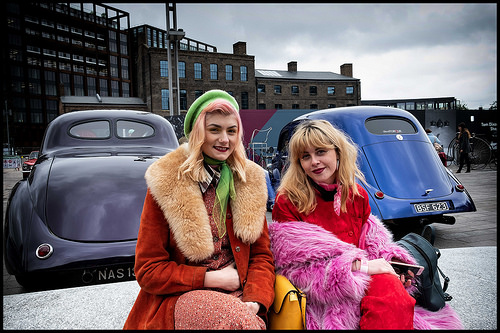
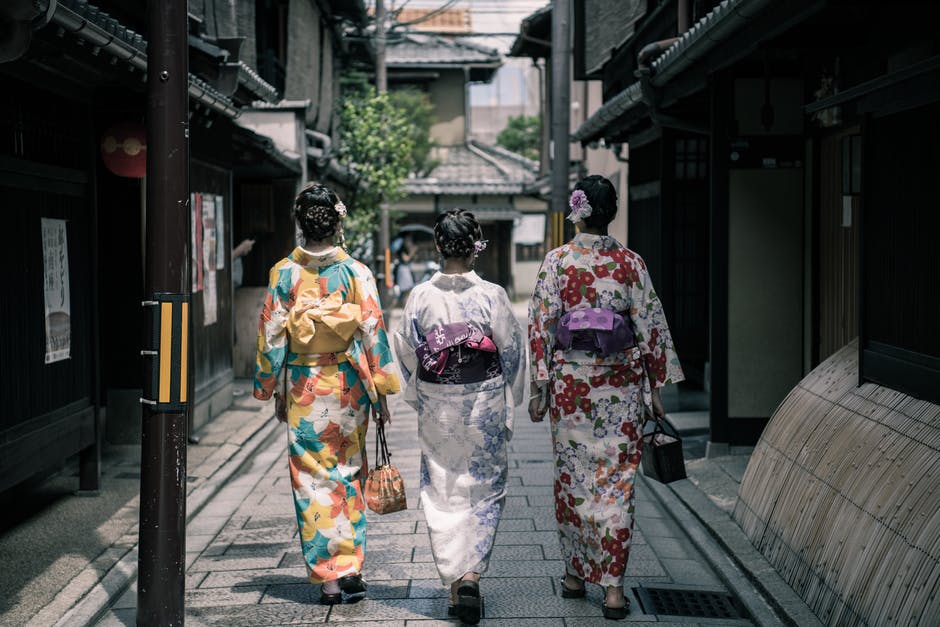 Image: Three women wearing kimonos tied intricately with obis.
 Image: Typical styles on the streets of Tokyo.


 The Global Fashion Files